China’s EV Revolution: Over 50% Market Share! The Tipping Point is Officially Here.
Executive Summary
The global automotive landscape has just witnessed a seismic shift. In early 2025, China, the world’s largest car market, officially crossed an unprecedented milestone: New Energy Vehicles (NEVs) – comprising Battery Electric Vehicles (BEVs) and Plug-in Hybrid Electric Vehicles (PHEVs) – have surged to command over 50% of all new car sales. This isn’t just a statistic; it’s the clarion call of a new era, a tipping point that firmly establishes China as the undisputed leader of the electric vehicle revolution. Driven by strategic government initiatives, a colossal build-out of charging infrastructure, and a dazzling array of innovative domestic brands, this achievement offers a glimpse into the future of mobility, not just for China, but for the entire world. This domestic triumph is now setting the stage for an accelerated global expansion of Chinese EV prowess.
1. The Numbers Don’t Lie: China Crosses the EV Rubicon
NEVs Conquer Half the Market
Reports emerging from China in the first quarter of 2025 paint a stunning picture: NEVs are consistently making up more than half of all new passenger car registrations. For a market of China’s sheer scale, this rapid transition is monumental. While other nations are celebrating EV shares in the teens or twenties, China has decisively shown that mainstream adoption isn’t a distant dream but a present-day reality. This figure represents a dramatic acceleration even from the already impressive numbers seen in 2023 and 2024, showcasing an exponential growth curve that has left many analysts astounded.
BEVs Leading the Pure Electric Charge
Within this NEV surge, pure Battery Electric Vehicles (BEVs) are a significant driving force, themselves capturing a remarkable market share hovering around the 27% to 31% mark in early 2025. This highlights a strong consumer preference for fully electric driving, bolstered by increasing range capabilities, expanding charging options, and decreasing battery costs. The remaining portion of the NEV share is robustly filled by PHEVs, which offer a crucial bridge for consumers still seeking the flexibility of a gasoline engine for longer trips, further smoothing the transition to electrification.
2. What’s Fueling China’s Unstoppable EV Momentum?
The Policy Push: From Subsidies to Strategic Focus
For years, the Chinese government has played a pivotal role in nurturing its NEV industry. While direct purchase subsidies have been largely phased out for consumers, the strategic emphasis remains. This includes production incentives for manufacturers, stringent emissions regulations for traditional vehicles, targets for NEV penetration, and significant investment in research and development. The “Made in China 2025” initiative and subsequent policies have clearly earmarked NEVs as a core strategic industry for global leadership.
Infrastructure: Charging Ahead with Unrivaled Scale
Range anxiety is a major barrier to EV adoption globally, but China has tackled this head-on with an unprecedented rollout of charging infrastructure. As of early 2025, the country boasts the world’s largest network of public and private charging piles, with numbers continuing to grow daily. This includes high-speed DC fast chargers along highways and in urban centers, as well as more widespread AC chargers. This visible commitment to infrastructure provides consumers with the confidence to make the switch.
Consumer Choice: A Dazzling Array of Homegrown Heroes
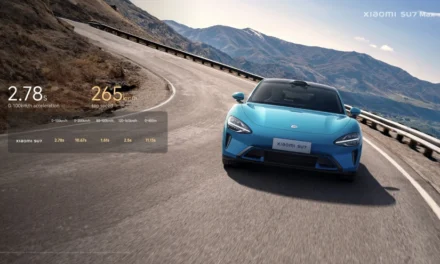
Perhaps the most vibrant factor is the sheer dynamism and competitiveness of China’s domestic EV brands. Companies like BYD (which became the world’s top EV seller), Nio, Xpeng, Li Auto, Geely (with brands like Zeekr), and newcomers like Xiaomi are flooding the market with a diverse range of high-quality, tech-laden EVs. From budget-friendly city cars to luxurious high-performance sedans and SUVs, there’s an electric option for nearly every taste and price point. These brands are known for their rapid innovation cycles, often bringing new models and features to market much faster than traditional global automakers.
3. A Glimpse into the Showrooms: Why Chinese Consumers are Going Electric
Beyond Economics: Tech, Style, and National Pride
While initially, government incentives and lower running costs were key drivers, the motivations for Chinese consumers have evolved. Today, the appeal of Chinese EVs often lies in their cutting-edge technology. Features like large interactive touchscreens, advanced driver-assistance systems (ADAS), seamless smartphone integration, and over-the-air updates are often standard. Modern, appealing designs and impressive performance metrics also play a crucial role. Furthermore, there’s a growing sense of national pride in supporting innovative domestic brands that are perceived as world-leading in this critical future industry.
The Smart EV Experience: More Than Just Transport
Chinese automakers are increasingly marketing their EVs not just as cars, but as “mobile smart spaces” or “intelligent cockpits.” This resonates with a tech-savvy consumer base that values connectivity and digital experiences. The car is becoming an extension of their digital lives, offering entertainment, productivity, and advanced safety features powered by sophisticated software and AI, often tailored specifically to local consumer preferences and digital ecosystems.
4. The “China Speed” Phenomenon: Lessons for the World?
How China Achieved in Years What Takes Others Decades
The term “China Speed” is often used to describe the rapid development across various sectors in the country, and the EV transition is a prime example. This acceleration is due to a unique combination of top-down strategic planning, massive investment (both public and private), intense domestic competition fostering rapid innovation, and a large, receptive consumer market. The vertical integration of many Chinese EV companies, particularly in battery supply chains, has also provided a significant advantage.
Challenges Overcome and Hurdles Remaining
The journey hasn’t been without challenges. Intense competition has led to price wars and concerns about profitability for some players. Ensuring consistent quality across a vast number of new models and managing the ramp-up of battery production and recycling are ongoing tasks. However, the industry has shown remarkable resilience and an ability to adapt and innovate at pace. The focus now shifts to sustainable profitability and managing the next phase of growth, including international expansion.
5. Domestic Dominance: The Launchpad for Global EV Leadership
Battle-Hardened Brands Ready for Export
The hyper-competitive Chinese domestic market acts as a crucible, forging strong, innovative, and cost-efficient EV manufacturers. Brands that succeed in China are well-prepared to take on global markets. They have already navigated complex supply chains, scaled production, and developed sophisticated technology platforms. This domestic success provides them with the volume, experience, and financial muscle to launch international sales offensives.
What This Means for International Markets
The implications of China’s EV dominance are profound for the global auto industry. International consumers can expect to see an increasing number of highly competitive Chinese EV models becoming available in their local markets, offering more choice and potentially driving down prices. For legacy automakers worldwide, this represents both a challenge and an urgent call to accelerate their own electrification and innovation efforts. China is no longer just a follower in the automotive world; in the EV segment, it is now decisively setting the pace.
Conclusion: China’s EV Tipping Point: A New Era for Global Motoring
China crossing the 50% NEV market share threshold in early 2025 is more than a regional success story; it’s a landmark event signaling a new era for global motoring. It demonstrates unequivocally that the transition to electric mobility can happen faster and more comprehensively than many believed possible. The strategies, innovations, and consumer behaviors witnessed in China will undoubtedly shape the future of the automotive industry worldwide. The electric dragon has truly awakened, and its journey is rapidly going global.
Actionable Takeaways:
- For Global Consumers: Get ready for an influx of innovative and competitively priced electric vehicles from Chinese brands. This increased competition is likely to benefit you with more choices and potentially better value.
- For Industry Watchers: China is now the undisputed epicenter of the EV universe. Trends, technological breakthroughs, and policy decisions originating here will have far-reaching global implications. Keep a close eye on Chinese standards and innovations.
- For Legacy Automakers: The benchmark for EV transition speed, market penetration, and technological integration has been emphatically set by China. The time for incremental change is over; bold and rapid adaptation is now essential for survival and relevance in the electric future.