Best Chinese EV SUVs Under $40,000 in 2025: Top Picks for Value, Range & Tech!
The quest for an affordable, feature-packed electric SUV in 2025 is leading more and more global buyers to look towards the dynamic Chinese EV market. With relentless innovation and fierce competition, Chinese manufacturers are delivering incredible value, especially in the sub-$40,000 USD segment. This price point is no longer about compromise; it’s about accessing impressive range, cutting-edge smart technology, and family-friendly practicality. This article dives into our top picks for the best Chinese EV SUVs available under this budget, examining their key specifications, strengths, and what makes them stand out in a crowded field. Whether you’re in China or an international market where these models are becoming available, discovering your perfect affordable EV SUV is more achievable than ever.
Currency & Pricing Disclaimer: For this article, we’re using a benchmark of $40,000 USD (which is approximately 280,000 RMB, or around AUD$60,000 at the time of writing, May 2025). Prices for export models in specific regions like Australia, Europe, or Southeast Asia can vary significantly due to import duties, taxes, shipping, local specification changes, and distributor pricing. Always check with local dealers for the most accurate on-road costs in your specific region. Chinese domestic prices are used as a primary reference here.
1. The Sub-$40k Chinese EV SUV Boom: Unpacking the Value
Why This Price Point is a Sweet Spot for Buyers
The under $40,000 USD bracket for EV SUVs represents a critical intersection of affordability and capability. For many families and individuals looking to transition to electric mobility, this price range makes modern EV technology accessible without venturing into premium luxury territory. Chinese brands have particularly excelled here, leveraging economies of scale, battery innovation (especially LFP chemistry), and highly competitive domestic market dynamics to offer compelling packages that often outperform international counterparts on a feature-per-dollar basis.
What Can You Realistically Expect? (General Features, Range, Tech)
In 2025, an EV SUV in this price range from a reputable Chinese brand typically offers:
- Decent Range: Often 400-500km+ (CLTC), which translates to a usable real-world range suitable for daily commutes and many weekend trips. WLTP figures, if available for export models, might be slightly lower but more aligned with international testing standards.
- Modern Battery Tech: Lithium Iron Phosphate (LFP) batteries are common, known for their durability, safety, and lower cost.
- Comprehensive Infotainment: Large touchscreens (12-15 inches), smart voice assistants, OTA (Over-The-Air) updates, and good smartphone integration.
- Advanced Driver-Assistance Systems (ADAS): Level 2 or L2+ ADAS features like adaptive cruise control, lane-keeping assist, and automatic emergency braking are increasingly standard.
- Comfort & Practicality: Spacious interiors for 5 adults, decent cargo space, and features like panoramic sunroofs and powered tailgates are often available.
2. Our Top Picks: Best Chinese EV SUVs Under $40,000 USD in 2025
After reviewing the market, here are some standout Chinese EV SUVs that offer exceptional value and features under the $40,000 USD threshold in China (prices are approximate and for the Chinese market, may vary by trim).
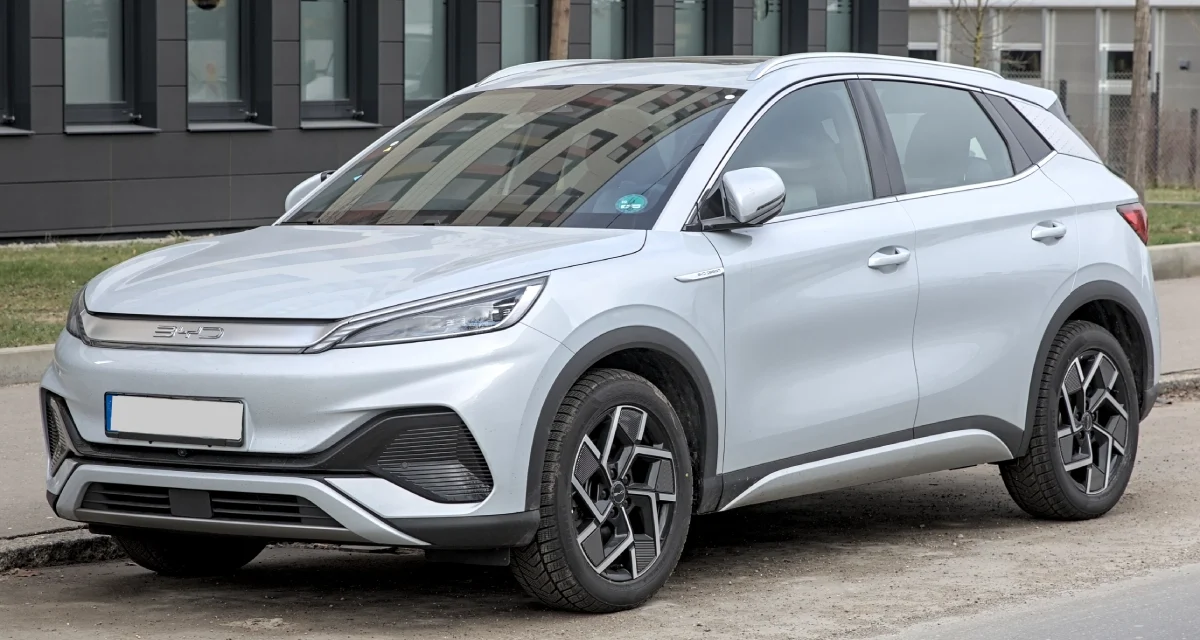
1. BYD Yuan Plus (Atto 3)
A consistent global bestseller for BYD, the Yuan Plus (known as the Atto 3 in many export markets, including Australia) remains a top contender for its well-rounded package, distinctive interior design, and proven Blade Battery technology.
Key Specifications:
- Approx. Price (China): ¥135,800 – ¥167,800 (approx. $19,000 – $23,500 USD)
- Battery Size: 49.92 kWh or 60.48 kWh LFP Blade Battery
- Claimed Range: Up to 430km or 510km (CLTC); Export models offer ~345km or 420km (WLTP)
- Power: 150 kW (201 hp)
- SUV Type: Compact SUV
Why It Makes Our List (Pros):
Excellent value for money, internationally proven with good reviews in export markets, distinctive and playful interior, efficient powertrain, and BYD’s reliable Blade Battery offering good safety and lifespan. Standard heat pump and V2L (Vehicle-to-Load) are great additions.
Things to Consider (Cons/Trade-offs):
The design might not be for everyone. Some find the infotainment system could be more intuitive initially. Single motor FWD only.
2. Chery iCar 03
The Chery iCar 03 brings a rugged, boxy, off-road-inspired design to the affordable EV SUV segment, packed with surprising technology and available with an intelligent all-wheel-drive system.
Key Specifications:
- Approx. Price (China): ¥109,800 – ¥169,800 (approx. $15,400 – $23,800 USD)
- Battery Size: Up to 69.77 kWh LFP battery
- Claimed Range: Up to 501km (CLTC for 2WD) / 472km (CLTC for AWD)
- Power: 135 kW (RWD) or 205 kW (AWD)
- SUV Type: Compact SUV with off-road styling
Why It Makes Our List (Pros):
Unique and appealing design that stands out. Availability of an intelligent electric AWD system at this price point is rare. Solid build quality, good level of standard tech features including a large central screen and decent ADAS. The “i-ROAD” intelligent all-terrain driving system on AWD models is a plus.
Things to Consider (Cons/Trade-offs):
Brand is newer and less established internationally than BYD or MG. Boxy design might impact aerodynamic efficiency slightly compared to sleeker rivals. International availability is still developing.
3. GAC Aion Y Plus
The Aion Y Plus focuses on maximizing interior space and practicality within a compact footprint, making it an excellent choice for urban families. It’s known for its “magazine-sized” large interior space concept.
Key Specifications:
- Approx. Price (China): ¥119,800 – ¥189,800 (approx. $16,800 – $26,600 USD)
- Battery Size: Various options, up to ~70 kWh LFP
- Claimed Range: Up to 610km (CLTC for top versions)
- Power: Typically around 150 kW (201 hp) for higher-spec models
- SUV Type: Compact MPV-styled SUV
Why It Makes Our List (Pros):
Exceptionally spacious and versatile interior for its class, often compared to vehicles a segment above. Good range options available. Smooth ride and comfortable cabin. GAC Aion is a major NEV player in China with a strong reputation.
Things to Consider (Cons/Trade-offs):
The design is more functional than sporty. While GAC Aion is big in China, its international brand presence is still growing compared to some rivals. Focus is more on comfort than outright driving dynamics.
4. Leapmotor C10 (EV Version)
Leapmotor’s C10 is its first global model, designed with international markets in mind from the outset. It offers a good balance of technology, space, and range at a very competitive price, now with the backing of Stellantis for European expansion.
Key Specifications:
- Approx. Price (China for EV versions): Starting around ¥140,000 – ¥170,000 (approx. $19,600 – $23,800 USD)
- Battery Size: ~52.9 kWh or ~69.9 kWh LFP battery
- Claimed Range: Up to 410km or 530km (CLTC)
- Power: 170 kW (228 hp)
- SUV Type: Mid-size SUV
Why It Makes Our List (Pros):
Built on Leapmotor’s latest “LEAP 3.0” architecture with a focus on intelligent features (NVIDIA Orin-X and Qualcomm Snapdragon 8295 chips in higher trims). Offers good interior space and a modern, minimalist design. The Stellantis partnership boosts its international credibility and potential for service/support in markets like Europe.
Things to Consider (Cons/Trade-offs):
As a newer global entrant, long-term reliability and resale value outside China are still being established. Some advanced ADAS features may be on higher trims outside the strictest sub-$40k interpretation if fully optioned for export.
5. BYD Song Plus EV Champion Edition / Seal U (EV)
The BYD Song Plus EV (which forms the basis for the Seal U in some export markets like Europe and Australia) is a slightly larger and more premium offering than the Yuan Plus, often fitting just within or slightly above the top end of our $40k USD benchmark in China for its higher-spec versions, but base models offer excellent value.
Key Specifications (for Champion Edition in China):
- Approx. Price (China): ¥149,800 – ¥189,800 (approx. $20,900 – $26,600 USD for 2025 models)
- Battery Size: 71.8 kWh or 87.04 kWh LFP Blade Battery
- Claimed Range: Up to 520km, 605km (CLTC)
- Power: 150 kW or 160 kW
- SUV Type: Mid-size SUV
Why It Makes Our List (Pros):
Offers more interior space and a more premium feel than the Yuan Plus. Impressive range options with BYD’s proven Blade Battery. Strong overall refinement, comfortable ride, and a comprehensive suite of tech features. Good looking and popular model in China.
Things to Consider (Cons/Trade-offs):
Higher-spec export versions (like Seal U) might exceed the $40k USD equivalent in some international markets once landed costs are included. Focus is on comfort and efficiency rather than sporty handling.
3. Essential Features to Prioritize in Your Sub-$40k EV SUV
Range Reality: Matching Kilometers to Your Lifestyle
Consider your daily commute and typical longer journeys. While CLTC range figures are prominent in China (and often 15-25% more optimistic than WLTP), look for WLTP if the car is sold internationally or apply a mental adjustment. Ensure the real-world range comfortably meets your needs.
Charging: Home and Public Options (and Speed)
Check the car’s AC (for home charging) and DC (for fast charging) capabilities. Most in this bracket will offer decent DC fast charging, but speeds can vary. Ensure compatibility with charging infrastructure in your area, especially if importing or buying in a new export market.
Tech & Connectivity: What Smart Features are Must-Haves?
A large, responsive touchscreen, reliable voice assistant, OTA updates, and good smartphone integration (though Android Auto/Apple CarPlay can be inconsistent in China-market native systems) are key. Assess the usability of the infotainment system.
Safety First: Non-Negotiable ADAS and Crashworthiness
Look for a good suite of ADAS features (AEB, ACC, Lane Keep Assist, Blind Spot Monitoring). Check for crash test ratings if available (C-NCAP for China, Euro NCAP/ANCAP for export models).
Practicality: Space, Storage, and Family-Friendliness
Evaluate rear passenger legroom and headroom, boot capacity (with seats up and down), and clever storage solutions. Features like ISOFIX points for child seats are crucial for families.
4. How Chinese Brands Deliver Such Impressive Value
The LFP Battery Advantage: Cost and Durability
Many Chinese EV makers utilize Lithium Iron Phosphate (LFP) batteries, which are generally more affordable to produce and offer excellent lifespan and safety profiles, even if slightly less energy-dense than NMC (Nickel Manganese Cobalt) alternatives. This cost saving is passed on to consumers.
Mastering the Supply Chain & Manufacturing Scale
China dominates the global EV battery supply chain. Companies like BYD are highly vertically integrated, producing their own batteries and many other components. Massive domestic production volumes also lead to significant economies of scale.
Fierce Domestic Competition Driving Innovation and Price Wars
The sheer number of EV brands in China creates an incredibly competitive environment. This pushes manufacturers to innovate rapidly, offer more features, and keep prices keen to attract buyers, directly benefiting consumers with better value propositions.
5. Important Considerations Before You Buy (Especially for International Customers)
Is It Available in Your Market? (Export Status)
While many Chinese EVs are fantastic, not all are officially exported. Check if the model you’re interested in is sold through official channels in your country. Grey imports can pose challenges with warranty and support.
Understanding Warranty, Servicing, and Parts Availability Locally
For officially imported models, investigate the local warranty terms, the number and quality of service centers, and the availability of spare parts. This is crucial for long-term ownership peace of mind.
Charging Standards and Compatibility in Your Region
China uses the GB/T charging standard. Export models are typically fitted with CCS2 (Europe/Australia) or Type 1 (North America, less relevant here) ports. Ensure the car matches your local public and home charging infrastructure.
Resale Value and Long-Term Ownership Prospects
As Chinese EV brands become more established internationally, their resale values are improving. However, for newer entrants, this might still be an unknown factor compared to legacy brands. Research local market perceptions if this is a major concern.
Conclusion: Finding Your Perfect Affordable Chinese EV SUV
The sub-$40,000 USD Chinese EV SUV segment in 2025 is brimming with exciting, high-quality options that genuinely challenge the status quo. Brands like BYD, Chery, GAC Aion, and Leapmotor are proving that affordability doesn’t mean skimping on range, technology, or desirable features. While international buyers need to consider local availability and support, the underlying value and innovation coming from China are undeniable. Careful research based on your specific needs and priorities will undoubtedly lead you to an electric SUV that offers an incredible bang for your buck.
Actionable Takeaways
- For Prospective Buyers: Before diving deep into specific models, list your top 3-5 “must-have” features and your typical usage patterns (daily km, long trips, passenger/cargo needs). Then, compare the shortlisted vehicles against these personal priorities within the $40k budget.
- For International Shoppers (e.g., Australia, Europe, SE Asia): Prioritize models that are officially imported and sold in your country. Check local reviews, owner forums, and assess the dealer network and after-sales support reputation before committing.
- For Value Seekers: Don’t just focus on the newest releases. Some models launched in 2023 or 2024 might now have even more attractive pricing in 2025 while still offering 90-95% of the latest tech. Always look for “Champion Editions” or similar updated versions in China which often add features at similar prices.
- Test Drive Thoroughly: If possible, take extended test drives. Pay attention to the infotainment usability, ADAS performance in local conditions, and overall comfort and refinement, as these can be subjective.