
BYD EVs: The Ultimate Guide to China’s Top Electric Vehicle Powerhouse (2025)

BYD Build Your Dreams Seal EV Interior. Best Chinese EVs
Your comprehensive look into the brand that’s electrifying the world, one innovative vehicle at a time. Welcome to the definitive guide to understanding BYD’s dominant presence in the EV landscape of 2025.
In the rapidly accelerating world of electric vehicles, one name has surged to the forefront, challenging conventions and reshaping the automotive landscape: BYD (Build Your Dreams). This Chinese behemoth has transformed from a humble battery manufacturer into the world’s leading seller of New Energy Vehicles (NEVs), a testament to its relentless innovation, strategic foresight, and mastery of core EV technologies. As of 2025, BYD isn’t just a dominant force in China; it’s a rapidly expanding global powerhouse, introducing an impressive and diverse lineup of electric and plug-in hybrid vehicles to consumers across the planet. This comprehensive pillar post dives deep into the world of BYD, exploring its meteoric rise, its groundbreaking technologies like the renowned Blade Battery and e-Platform 3.0, its multi-brand strategy encompassing everything from some of the best affordable city cars to ultra-luxury off-roaders, its aggressive global expansion (including its significant impact in markets like Australia), and what the future holds for this undisputed top-tier leader in the electric revolution. Consider this your ultimate guide to understanding BYD’s electrifying journey and why they are consistently ranked among the top EV choices.
1. The Rise of BYD: From Batteries to Global EV Supremacy
BYD’s story isn’t an overnight success; it’s one of remarkable transformation, strategic pivots, and a deep-seated expertise that laid the groundwork for its current commanding position in the global EV market.
A Brief History: BYD’s Foundations in Battery Technology
Founded in the vibrant tech hub of Shenzhen in 1995 by the visionary Wang Chuanfu, BYD’s initial foray wasn’t into cars, but into the intricate world of rechargeable battery technology. It wasn’t long before BYD established itself as a major global supplier, powering mobile phones, laptops, and a myriad of consumer electronics. This early and profound expertise in battery chemistry, materials science, and mass-manufacturing processes became the bedrock of BYD’s future automotive ambitions, providing a critical competitive advantage that few could match when it acquired Tsinchuan Automobile Co Ltd in 2003, officially stepping into the auto sector.
Multimedia Concept: A visually engaging timeline infographic here would be perfect, charting BYD’s journey from 1995 to its current status in 2025, highlighting key milestones like battery innovations, first EV/PHEV launches, and major sales achievements.
The Pivot to New Energy Vehicles: Milestones and Growth
Even as it navigated the traditional auto world, BYD’s leadership kept a keen eye on the horizon of electrification. This foresight led to the launch of its first plug-in hybrid vehicle (PHEV), the F3DM, as early as 2008 – a pioneering move at the time. This was followed by its first mass-produced pure electric vehicle (BEV), the e6, in 2010, often used in taxi fleets, showcasing early real-world EV viability. While these initial forays were learning experiences, BYD’s commitment to NEVs never wavered. The company diligently refined its technologies, aligning perfectly with the Chinese government’s increasing strategic emphasis on new energy. The true inflection point arrived in the mid-2010s as China’s domestic EV market began its exponential ascent. BYD’s incredibly bold and, in hindsight, genius decision to entirely cease production of traditional internal combustion engine (ICE) vehicles in early 2022 to focus solely on NEVs (BEVs and PHEVs) was a definitive statement that has since paid off spectacularly, making them a top NEV-only manufacturer.
Becoming a Top Global EV Manufacturer: Key Achievements in 2024-2025
The period from 2022 to 2025 has been nothing short of meteoric for BYD. The company didn’t just grow; it exploded onto the global scene. It consistently vied with and often surpassed Tesla in overall NEV sales, and even achieved quarterly leadership in pure BEV sales at times. In 2024, BYD’s sales figures were astounding, reaching over 4.3 million NEVs. This incredible momentum carried into 2025, with close to a million passenger vehicles sold in the first quarter alone, representing substantial year-over-year growth. Critically, its export numbers are surging, more than doubling in early 2025 compared to the previous year. This isn’t merely about impressive sales figures; it’s a clear signal of BYD establishing a formidable global footprint and fundamentally challenging the long-established hierarchy of the automotive world.
BYD’s Vision: “Cool the Earth by 1°C”
Underpinning BYD’s commercial success is a powerful corporate vision: “Cool the Earth by 1°C.” This ambitious slogan reflects a profound commitment to tackling climate change through the widespread adoption of sustainable transportation and renewable energy solutions. This mission is not just a marketing tagline; it genuinely drives the company’s innovation in NEVs, advanced battery storage systems, solar power generation, and even electrified public transport solutions like buses and its SkyRail monorail system. It’s a holistic approach to a greener future.
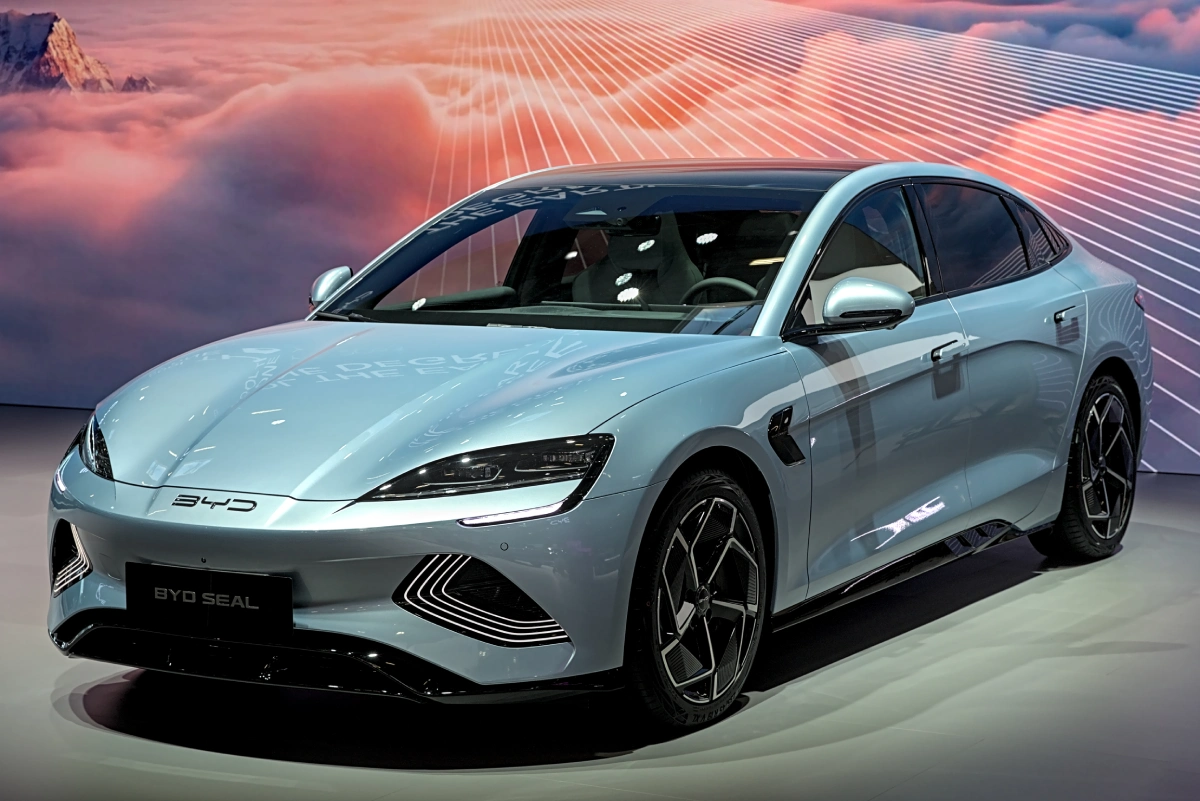
BYD Seal China’s highest selling flagship EV
2. BYD’s Best Electric Innovations: The Technology Powering the Drive
At the very core of BYD’s extraordinary success lies its relentless dedication to in-house research, development, and manufacturing of critical EV technologies. This deep vertical integration provides unparalleled advantages in terms of cost control, performance optimization, and supply chain resilience, setting it apart from many competitors.
The Revolutionary Blade Battery: A Game-Changer for Safety and Density
What makes the BYD Blade Battery one of the best and most talked-about innovations? Unveiled in 2020, this unique Lithium Iron Phosphate (LFP) battery isn’t just an incremental improvement; it’s a fundamental redesign. Instead of conventional prismatic cells grouped into modules, the Blade Battery features long, thin cells – resembling blades – arranged in an array and inserted directly into the battery pack. This cell-to-pack (CTP) design dramatically improves space utilization, leading to higher energy density for an LFP chemistry. But its standout feature, and a top priority for BYD, is safety. BYD famously demonstrated the Blade Battery’s resilience in extreme nail penetration tests – a scenario where many other battery types would experience thermal runaway (smoke and fire). The Blade Battery, however, remained stable, showcasing its superior thermal stability and safety. Beyond safety, it offers a long cycle life and is generally more cost-effective to produce than Nickel Manganese Cobalt (NMC) alternatives, making it a cornerstone of BYD’s value proposition across its EV lineup in 2025. It’s a technology that has truly reassured many consumers about EV safety.
(Internal Link Suggestion: Why not dive deeper? Check out our detailed cluster post: “Deep Dive: Understanding BYD’s Blade Battery Technology and Its Top Advantages”.)
e-Platform 3.0 (and Evolving Architectures like “Super e-Platform”): Efficiency and Integration at its Core
Introduced in 2021, BYD’s e-Platform 3.0 is a dedicated, highly integrated EV architecture designed to optimize performance across four key pillars: intelligence, efficiency, safety, and aesthetics. Some of its best features include:
- World’s First 8-in-1 Electric Powertrain: This remarkable piece of engineering integrates the Vehicle Control Unit (VCU), Battery Management System (BMS), Motor Control Unit (MCU), Power Distribution Unit (PDU), DC-DC converter, on-board charger, drive motor, and reducer into a single, compact unit. This enhances efficiency, reduces weight, and optimizes space.
- Wide-Temperature Range Heat Pump: A standard feature that significantly improves thermal management efficiency for both the battery and cabin, crucial for preserving range in cold and hot climates – often a top concern for EV buyers.
- 800V Architecture Support: While not all e-Platform 3.0 cars use it yet, the platform is designed to support 800V high-voltage fast charging, enabling quicker top-ups. More recently, BYD unveiled its even more advanced “Super e-Platform,” underpinning models like the new Han L and Tang L, boasting 1000V architecture and incredible 10C charging rates, claiming hundreds of kilometers of range added in just minutes. This is truly top-tier charging tech.
This platform underpins many of BYD’s global best-sellers, including the Seal and Dolphin, and its principles of integration and efficiency continue to evolve in BYD’s newer vehicle architectures.
DM-i and DM-p Super Hybrid Systems: Bridging the Gap to Full Electric
While this guide focuses on BYD’s pure EVs, it’s impossible to ignore the colossal success of their “Dual Mode” (DM) plug-in hybrid systems, which represent some of the best PHEV technology on the market and are a crucial part of BYD’s NEV strategy. They serve as an excellent bridge for consumers transitioning to full electrification.
- DM-i (Dual Mode – intelligent): This system prioritizes electric drive for most scenarios, with an ultra-efficient, specially designed Xiaoyun gasoline engine primarily acting as a generator to charge the battery. It results in exceptionally low fuel consumption and very long combined ranges. Models like the Qin Plus DM-i and Song Plus DM-i have been chart-toppers, and the newer Qin L DM-i launched in 2024 boasts a staggering claimed combined range of over 2,100 km, making it one of the best options for range anxiety.
- DM-p (Dual Mode – performance): This variant is geared towards performance, combining a more powerful turbocharged engine with dual electric motors for robust all-wheel-drive capability and exhilarating acceleration. It’s found in higher-performance versions of models like the Tang and Han.
Cell-to-Body (CTB) Technology: Enhancing Safety and Space
Taking battery integration to the next level, BYD’s innovative Cell-to-Body (CTB) technology, often used in conjunction with the Blade Battery, directly integrates the battery pack into the vehicle’s chassis. The battery’s top cover becomes the vehicle floor. This highly efficient design offers several key benefits: it significantly increases the vehicle’s torsional rigidity (improving handling and crash safety), allows for a lower vehicle profile for better aerodynamics, and maximizes interior space by eliminating the traditional separate battery module housing. The BYD Seal was a pioneering model showcasing this top-level structural battery innovation.
DiPilot: BYD’s Advanced Driver Assistance System (ADAS)
BYD is making significant strides with its in-house developed **DiPilot** ADAS suite. The system is continuously evolving, with newer iterations incorporating an extensive array of sensors, including high-definition cameras, millimeter-wave radars, and, on some higher-end models and joint venture vehicles like the Denza N7, LiDAR technology. DiPilot enables a comprehensive range of Level 2+ driving assistance features, such as:
- Highway Navigate on Autopilot (HNOA) for assisted driving on highways, including automatic lane changes and overtaking.
- Automated Valet Parking (AVP).
- Robust Automatic Emergency Braking (AEB) systems, functional up to high speeds and designed to detect pedestrians and cyclists.
In a significant move in early 2025, BYD began rolling out its “God’s Eye” advanced intelligent driving system (a sophisticated version of DiPilot, sometimes referred to as DiPilot 100, 300, or 600 depending on capability level) for free across many of its vehicle lineups in China, aiming to democratize access to higher-level ADAS features, making some of the best safety tech more widely available.
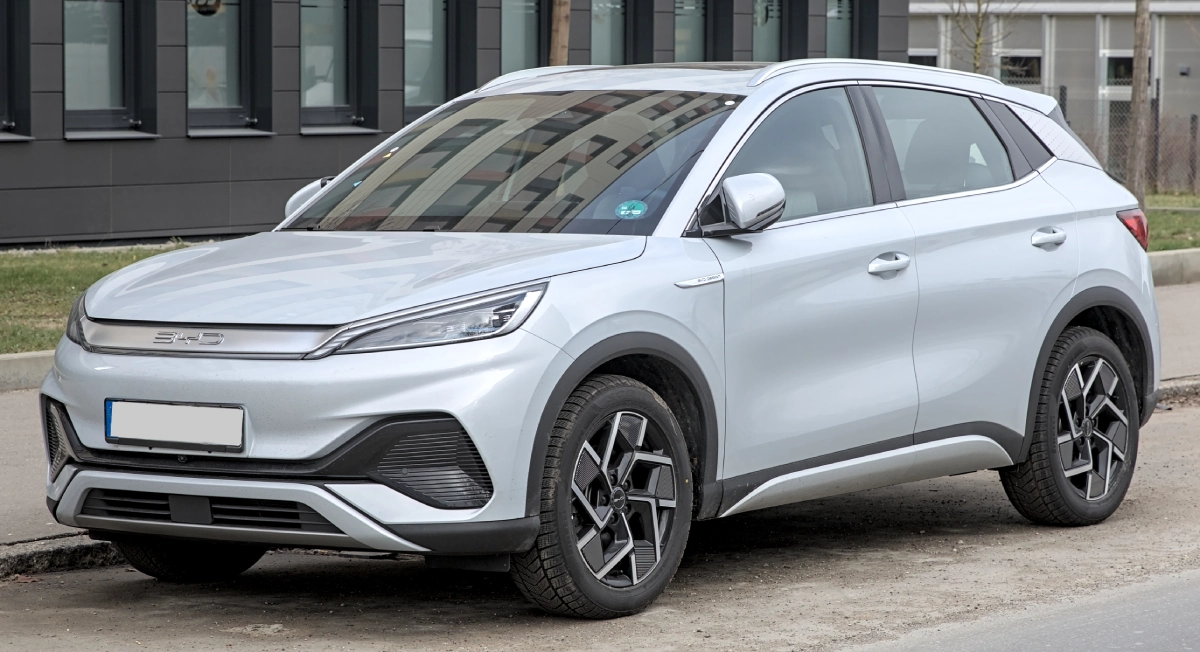
BYD Atto SUV 2023 -[image credit Wikipedia – Alexander-93]
3. Meet the Fleet: BYD’s Top EV Models and Sub-Brands in 2025
BYD’s multi-pronged approach to the market is evident in its diverse and rapidly expanding lineup. This strategy ensures there’s a BYD NEV for almost every taste, need, and budget, from affordable city commuters to ultra-luxury tech showcases. The core offerings are largely split between the youthful “Ocean” series and the more established “Dynasty” series, complemented by increasingly ambitious sub-brands.
Discover BYD’s Globally Popular Electric Vehicles (2025)
BYD has rapidly expanded its electric vehicle offerings across the globe, quickly becoming a formidable name in numerous international markets. Below is a table highlighting some of their most popular and widely available EV cars and SUVs as of May 2025. These models are making significant inroads in regions like Europe, Southeast Asia, Latin America, and, notably, Australia, often praised for their technology, safety, and value proposition.
Important Disclaimer on Pricing, Specifications & Links:
The “Approx. Price Indication” column clearly states that pricing is highly variable by region due to import duties, local taxes, shipping costs, specific market configurations, and distributor/dealer pricing strategies. Always consult your local official BYD dealer or website for the most accurate and current pricing and detailed specifications in your country. Information on features and availability is based on general international releases and may differ in your specific market. Links provided are starting points; searching for your local BYD website is recommended for the most relevant information. “Aggregated Customer Ratings” are qualitative due to the lack of a universal, real-time metric; please consult local reviews and owner forums for detailed feedback.
| Model Name (Common Export Name) | Vehicle Type | Key International Markets (Examples) | Key Features/Selling Points (International Context) | Approx. Price Indication | Aggregated Customer Ratings | Link to Official BYD Info |
|---|---|---|---|---|---|---|
| BYD Atto 3 (Yuan Plus) | Compact SUV | Australia, NZ, UK, Europe, SE Asia, India, Brazil | e-Platform 3.0; Blade Battery; 5-Star Euro NCAP/ANCAP; V2L; Panoramic Sunroof; Unique Interior. 2025 facelift in some markets. | Varies by Region – Check Local BYD Website | Generally Positive: Praised for value, practicality & safety. Check local reviews. | BYD Australia / Global |
| BYD Seal | Mid-size Sedan | Australia, NZ, UK, Europe, SE Asia, Latin America | “Ocean Aesthetics” design; Blade Battery with CTB; RWD/AWD options; Performance (AWD 0-100km/h ~3.8s); 5-Star Euro NCAP/ANCAP. | Varies by Region – Check Local BYD Website | Strongly Positive: Often lauded for performance, build & tech vs. price. Check local reviews. | BYD Australia / Global |
| BYD Dolphin | Compact Hatchback | Australia, NZ, UK, Europe, SE Asia, Latin America, Japan | Affordable EV entry; Blade Battery; Spacious for size; Good city car; 5-Star Euro NCAP/ANCAP. 2025 China facelift added features. | Varies by Region – Check Local BYD Website | Popular: Well-received for value & as an accessible EV. Check local reviews. | BYD Australia / Global |
| BYD Seal U (Song Plus EV in China; Sealion 6 for PHEV in AU) | Mid-size SUV | Europe, Australia (PHEV as Sealion 6, EV anticipated), SE Asia | Family-focused; Spacious; Blade Battery (EV); Available as BEV or DM-i PHEV; Large rotating screen; Comfort-oriented. WLTP range up to 500km for EV. | Varies by Region – Check Local BYD Website | Positive Initial Reception: Noted for comfort and space in early European reviews. Check local launch reviews. | Search “BYD Seal U [Your Region]” or BYD AU (Sealion 6 PHEV) / Global |
| BYD Han EV | Large Executive Sedan | Europe (select markets), Latin America, Middle East | Flagship luxury; Blade Battery; AWD performance option (~3.9s 0-100km/h); DiPilot ADAS; Premium interior. WLTP range ~521km. | Varies by Region – Check Local BYD Website (Premium) | Generally Good: Appreciated for luxury and tech where available. Check regional specialist reviews. | Search “BYD Han EV [Your Region]” or BYD Europe (Han) |
| BYD Tang EV | Large 7-Seater SUV | Europe (esp. Norway), Latin America | 7-seat capacity; AWD standard in many export versions; Blade Battery (~108kWh); Premium features; 5-Star Euro NCAP (2023). WLTP range ~530km. | Varies by Region – Check Local BYD Website (Premium) | Positive in Target Markets: Valued for space, safety, and AWD in colder climates. Check regional reviews. | Search “BYD Tang EV [Your Region]” or BYD Europe (Tang) |
| BYD Seagull (Dolphin Mini / Dolphin Surf) | City Car / Supermini | Latin America, SE Asia; Launching in Europe (as Dolphin Surf) 2025. | Ultra-affordable global EV; Blade Battery; Compact & agile; Surprisingly spacious for segment; Modern city car tech. CLTC range up to 405km. | Varies by Region – Check Local BYD Website (Entry-Level) | High Demand: Very popular in initial launch markets for its price/value. General sentiment very positive. | Search “BYD Dolphin Mini [Your Region]” or BYD Global |
Note: This list focuses on BYD’s pure Battery Electric Vehicles (BEVs) with significant international presence or confirmed near-term rollout. BYD also offers an extensive and highly successful range of DM-i and DM-p Plug-in Hybrid Electric Vehicles (PHEVs) globally, which may be covered in separate resources. Model availability, names, and specifications can change, so always verify with official BYD channels for your specific location.
Ocean Series: Youthful Designs & Top Value
Characterized by marine-inspired names (Dolphin, Seal, Seagull, Sea Lion) and often more dynamic, youthful styling, the Ocean series primarily consists of pure electric vehicles that have quickly become some of BYD’s best-sellers globally.
- BYD Dolphin: This compact electric hatchback has been a phenomenal success both in China and in numerous export markets, including Australia. It offers a spacious interior for its size, good range, the safety of the Blade Battery, and a cheerful design, all at a very competitive price point. It’s arguably one of the best entry-level family EVs.
- BYD Seal: A sleek, sporty mid-size electric sedan directly challenging competitors like the Tesla Model 3. It’s lauded for its attractive design, impressive performance (especially the dual-motor AWD version), Cell-to-Body technology, and premium interior. The Seal is a key model for BYD’s global push and is well-received in markets like Australia and Europe.
- BYD Seagull (often rebadged as Dolphin Mini in some export markets): This ultra-affordable city EV has taken China by storm, opening up electric mobility to a massive new segment of buyers with its sub-$10,000 USD starting price (in China, 2025 promotional pricing even saw it dip under $8,000). Its compact size, decent city range, and modern features make it a top contender for urban commuting.
- BYD Sea Lion (e.g., Sea Lion 05, Sea Lion 07): This nameplate represents BYD’s newer line of dynamic and stylish electric SUVs within the Ocean series. The Sea Lion 05 EV, a compact crossover, launched in China with attractive pricing and features. The larger Sea Lion 07, a mid-size SUV based on the e-Platform 3.0 Evo and targeting the Tesla Model Y, is anticipated in markets like Australia during 2025, promising advanced tech and BYD’s latest design language.
(Internal Link Suggestion: Throughout this section, model names like “BYD Dolphin Review” or “Exploring the BYD Seal’s Technology” should be primed to link to your specific cluster articles.)
Dynasty Series: Established Performers & Family Favorites
Bearing names from illustrious Chinese dynasties, these models often represent BYD’s more established and family-oriented vehicles. Many are available in both pure EV and highly efficient DM-i/DM-p Super Hybrid versions, contributing significantly to BYD’s overall sales volume.
- BYD Han: BYD’s flagship large sedan, available as a luxurious pure EV or a potent DM-p hybrid. The Han EV offers impressive range (up to 700km+ CLTC on some 2025 “L” versions), a sophisticated interior, and strong performance. The new Han L EV, introduced with the Super e-Platform, offers even faster charging and enhanced capabilities, placing it among the top executive electric sedans from China.
- BYD Tang: A versatile and spacious 7-seater SUV, ideal for larger families. Available as a pure EV with excellent range and as a powerful DM-p hybrid. Like the Han, the new Tang L EV variants also benefit from the Super e-Platform and its ultra-fast charging.
- BYD Song (Plus/Pro/L): This range of mid-size SUVs is a cornerstone of BYD’s sales success, consistently ranking among the best-selling NEVs in China. The Song Plus EV (which forms the basis for the Seal U in some export markets, including Australia) offers a great balance of space, comfort, and electric range. The Song L, a more stylish fastback/coupe SUV launched in late 2023/early 2024 with prices from approx. $26,700 USD in China, has quickly become a hit for its avant-garde design and tech within the Dynasty series.
- BYD Yuan Plus (Atto 3): One of BYD’s most successful global exports, this compact electric SUV is known as the Atto 3 in markets like Australia, Europe, and Southeast Asia. It’s praised for its unique and high-quality interior, efficient powertrain featuring the Blade Battery, and competitive pricing, making it one of the best value electric SUVs available internationally.
- BYD Qin (Plus/L): A popular compact sedan, particularly dominant in its DM-i hybrid form. The Qin Plus DM-i and the newer Qin L DM-i (launched 2024) are renowned for their incredible fuel efficiency and astonishing combined ranges, with the Qin L DM-i targeting over 2,100km, making it a top choice for those seeking to minimize fuel costs without compromising on range.
Denza: Premium JV Pushing Boundaries
Denza, originally a 50/50 joint venture with Mercedes-Benz, is now majority-controlled by BYD (90%) and serves as its premium sub-brand, blending BYD’s NEV technology with a touch of luxury aspiration.
- Denza D9: This luxurious MPV has been a massive sales success in China since its launch, challenging established players in the premium people-mover segment. It’s available in both EV and DM-i hybrid versions, packed with high-end features and comfort.
- Denza N7: A premium mid-size SUV competing with models like the Tesla Model Y, but with a distinct Denza design and luxury focus. The 2025 N7 models in China (starting around $35,680 USD) come standard with BYD’s “God’s Eye B” (DiPilot 300) intelligent driving system, often including LiDARs, and boast 800V fast charging and impressive CLTC ranges up to 702km.
- Denza N8: A larger SUV offering, building on the N7’s premium positioning.
Yangwang: The Pinnacle of BYD’s Luxury and Technology
Launched in early 2023, Yangwang is BYD’s audacious move into the ultra-luxury segment, with vehicles priced over 1 million RMB (approx. $140,000 – $150,000 USD). Yangwang serves as a showcase for BYD’s most advanced and sometimes seemingly fantastical technologies.
- Yangwang U8: An extraordinary large luxury off-road SUV built on the e⁴ platform (quad-motor individual wheel drive). It boasts incredible off-road capabilities, including “tank turns” (360-degree turns on the spot), precise torque vectoring, and even an emergency amphibious mode allowing it to float and wade through water. Its range-extended powertrain delivers over 1,000km of total range. It’s truly one of the top showcases of EV tech.
- Yangwang U9: A pure electric supercar designed to rival established hypercar brands. It features the e⁴ platform and BYD’s groundbreaking DiSus-X intelligent body control system, which allows for unprecedented suspension adjustments, enabling the car to drive on three wheels or even perform a controlled “jump.” Its acceleration figures are in the sub-2-second range for 0-100km/h.
Fang Cheng Bao: Professional-Grade Personalized Off-Roaders
Launched in mid-2023, Fang Cheng Bao (meaning “Formula Leopard”) is BYD’s sub-brand dedicated to “professional-grade new energy personalized off-road vehicles.” It sits below Yangwang but above the mainstream BYD series, targeting enthusiasts who want serious off-road capability combined with NEV technology.
- Bao 5 (Leopard 5): The brand’s first model, a rugged ladder-frame SUV. It features BYD’s DMO (Dual Mode Off-road) super hybrid platform, combining a potent gasoline engine with dual electric motors for exceptional torque and off-road control. It offers features like multiple locking differentials and advanced off-road driving modes. Smart Driving Edition variants launched in early 2025 offer options for either BYD’s God’s Eye C system or Huawei’s Qiankun ADS 3.0.
- Tai Series (e.g., Tai 7): A newer series focusing on SUVs that might blend off-road aesthetics with more on-road comfort. The Tai 7, leaked in May 2025, is expected to offer both BEV and PHEV options and slot below the Bao 5 in price.
Upcoming Models & Concepts: What’s Next from BYD’s Top Designers?
Knowing BYD, the innovation pipeline is always full. For 2025 and looking towards 2026, expect further refinement and expansion of all existing series and sub-brands. This includes continuous updates to battery technology (perhaps wider adoption of higher-density LFP or next-gen Blade tech), enhancements to the DiPilot ADAS, evolution of the e-Platform and Super e-Platform, and new models filling any perceived gaps or creating new niches. Their global models will also likely see more localized adaptations as they gather more market feedback.
4. BYD on the World Stage: Global Expansion and Market Impact
BYD’s domestic success was just the beginning. By 2025, its global expansion efforts have become a defining characteristic of the company, making it a truly international automotive force.
Key International Markets: Success in Europe, SE Asia, Australia, Latin America
BYD’s global footprint is rapidly expanding. Key regions and achievements include:
- Europe: A major focus, with entries into Germany, the UK, France, Spain, Italy, Norway, Sweden, and the Netherlands. Models like the Atto 3, Dolphin, Seal, and more recently the Seal U (Song Plus EV) are leading the charge. A manufacturing plant in Hungary is set to begin production in late 2025, marking a significant step in localizing for the European market.
- Southeast Asia: BYD has made significant inroads in Thailand (where it’s a market leader and has a manufacturing plant), Malaysia, Singapore, Vietnam, and Indonesia. The Atto 3 and Dolphin are particularly popular.
- Australia & New Zealand: These have been standout success stories. The BYD Atto 3 quickly became one of Australia’s best-selling EVs upon launch, followed by strong receptions for the Dolphin and Seal. The brand’s growth here has been remarkable, challenging established players.
- Latin America: Brazil is a key market, with BYD investing in a local manufacturing complex. Other countries in the region are also seeing increased BYD presence.
- Middle East & Other Markets: BYD is also expanding into the Middle East, Japan (though a tougher market for foreign brands), India, and parts of Africa.
BYD’s global sales target for 2025 includes aiming to double its previous year’s exports, potentially reaching around 800,000 units sold outside China, with an even more ambitious long-term goal for international sales to comprise up to 50% of its total by 2030.
Strategies for Global Growth: Local Production, Partnerships, and Adaptation
BYD’s international strategy is multifaceted:
- Overseas Manufacturing: Building plants in key regions (Thailand, Hungary, Brazil) is crucial to mitigate tariffs, reduce shipping costs, speed up delivery, and create local employment, fostering better market integration.
- Collaboration with Local Partners: Working with experienced local importers, distributors, and dealership groups to establish sales, service, and charging support networks rapidly.
- Product Localization: Adapting vehicles to meet specific regional regulations (e.g., safety standards, charging connectors like CCS2 for Europe/Australia), consumer preferences (e.g., feature sets, interior choices), and driving conditions.
- Brand Building: Investing in marketing and brand awareness campaigns to establish BYD as a trusted and desirable automotive brand in new markets.
How BYD is Challenging Established Automakers and Influencing Global EV Prices
The “BYD effect” is palpable in many markets. Its ability to offer feature-rich, technologically advanced EVs with good range at highly competitive price points is forcing established international automakers to:
- Re-evaluate their own EV pricing strategies.
- Accelerate their EV development timelines.
- Focus more on cost efficiencies in their own supply chains.
This increased competition, largely driven by BYD and other Chinese EV makers, is ultimately benefiting consumers by making EVs more affordable and accessible globally, thus speeding up the overall transition to electric mobility.
5. Why BYD is a Top Contender: Strengths, Challenges, and Future Outlook (2025 & Beyond)
Key Strengths: Vertical Integration, Cost Leadership, Innovation Speed, Diverse Portfolio
BYD’s position as a top global EV player in 2025 is built on several core pillars:
- Unparalleled Vertical Integration: From mining lithium and producing battery cells (LFP Blade Battery being a prime example) to manufacturing semiconductors (through BYD Semiconductor), electric motors, controllers, and entire vehicles, BYD controls an extraordinary portion of its value chain. This provides immense advantages in cost control, supply security, and the ability to rapidly integrate new technologies.
- Cost Leadership: This deep integration, particularly its mastery of LFP battery technology, allows BYD to produce EVs and PHEVs at a cost base that many competitors find difficult to match, enabling aggressive pricing strategies.
- Speed of Innovation and Iteration: BYD launches new models, refreshes existing ones, and introduces new technologies at a breathtaking pace. This agility keeps its lineup fresh and allows it to respond quickly to market trends and consumer feedback.
- Comprehensive Product Portfolio: With its Ocean and Dynasty series, and its premium/niche sub-brands (Denza, Yangwang, Fang Cheng Bao), BYD offers NEVs across virtually every market segment and price point, from some of the best budget city cars to ultra-luxury technological showcases.
- Strong R&D Commitment: Continuous and substantial investment in research and development ensures a pipeline of new technologies in batteries, electric drive systems, vehicle intelligence, and platform architectures.
Potential Challenges: Brand Perception in New Markets, Geopolitical Factors, Intense Competition
Despite its impressive trajectory, BYD faces ongoing and emerging challenges:
- Building Brand Equity Internationally: In many Western markets with long-established automotive loyalties, building brand trust, recognition, and a premium perception comparable to legacy automakers takes sustained effort, excellent product experiences, and top-notch customer service over many years.
- Geopolitical Tensions and Trade Policies: The rise of Chinese EVs has led to increased scrutiny from some Western governments, resulting in anti-subsidy investigations (like in the EU) and the imposition or threat of higher tariffs. These protectionist measures and geopolitical considerations can significantly impact market access and competitiveness.
- Intense and Growing Competition: The global EV market is far from a one-horse race. BYD faces strong competition from Tesla, established automakers rapidly transitioning to EVs (like VW, Hyundai-Kia, Stellantis), and other ambitious Chinese EV brands also expanding globally.
- Establishing Robust Global After-Sales Networks: Providing consistent, high-quality after-sales service, spare parts availability, and software support across dozens of diverse international markets is a massive and complex logistical undertaking that is crucial for long-term customer satisfaction.
- Navigating Varying Regulations and Standards: Each new market brings its own set of vehicle safety standards, charging protocols, data privacy laws, and consumer protection regulations that must be meticulously adhered to.
BYD’s Future Roadmap: Focus on Intelligence, Further Global Reach, and New Technologies
Looking towards the remainder of 2025 and into the near future, BYD’s strategy is expected to focus on several key areas:
- Enhanced Vehicle Intelligence: A major push to further develop and deploy its DiPilot ADAS and smart cockpit technologies across its model range, aiming for higher levels of autonomy and more sophisticated user experiences.
- Accelerated Global Expansion: Continued entry into new markets, coupled with the ramp-up of its overseas manufacturing facilities (Hungary, Thailand, Brazil, etc.) to deepen localization and mitigate trade risks.
- Next-Generation Battery and Platform Technologies: Ongoing evolution of its Blade Battery (potentially new chemistries or structural designs), further development of its e-Platform architecture (including the Super e-Platform with 1000V capabilities), and potentially breakthroughs in areas like solid-state batteries in the longer term.
- Growth of Premium Sub-Brands: Cultivating Denza, Yangwang, and Fang Cheng Bao to capture higher-margin segments and showcase technological leadership, both domestically and potentially in select international markets.
- Sustainability Initiatives: Furthering its “Cool the Earth by 1°C” mission through advancements in vehicle efficiency, use of sustainable materials, and expansion of its renewable energy and battery storage businesses.
Is a BYD EV Right for You? Considerations for Potential Buyers
If you’re in the market for an EV in 2025, a BYD model certainly warrants strong consideration, particularly if available in your region. They generally offer some of the best battery technology (especially regarding LFP safety and longevity), a wide array of models catering to different needs and budgets, and an increasingly compelling package of design, technology, and performance. Key things to evaluate will be the specific model’s fit for your lifestyle (range, size, features), the local dealer and service support in your area (especially crucial for international buyers in places like Australia), local reviews, and how its pricing and warranty stack up against competitors in your specific market.
Conclusion: BYD – Driving the Future of Global Electric Mobility
As we navigate 2025, BYD stands as a true titan in the global New Energy Vehicle industry. Its journey from a battery specialist to the world’s top NEV seller is a compelling narrative of vision, innovation, and relentless execution. With its groundbreaking Blade Battery, versatile e-Platform architecture, highly efficient DM-i/p hybrid systems, and an ever-expanding, diverse portfolio spanning the Ocean, Dynasty, Denza, Yangwang, and Fang Cheng Bao brands, BYD has redefined what consumers can expect from electric and electrified vehicles. Its aggressive yet strategic global expansion is not just challenging established automotive hierarchies but is also playing a pivotal role in accelerating the worldwide adoption of electric mobility. While geopolitical headwinds and the complexities of building a truly global brand present ongoing challenges, BYD’s fundamental strengths in technology, vertical integration, and manufacturing scale position it to be one of the most influential and enduring forces shaping the future of transportation for decades to come. For anyone interested in the EV revolution, BYD is, without a doubt, a company leading the charge and building the dream of a cooler planet, one innovative vehicle at a time.
Actionable Takeaways
- For Potential EV Buyers: If BYD models like the Atto 3 (Yuan Plus), Dolphin, Seal, or the upcoming Sea Lion 07 are available in your market (e.g., Australia), they offer some of the best combinations of safety (Blade Battery), technology, and value. Always compare local specs and test drive.
- For Industry Watchers: BYD’s model of deep vertical integration, particularly in battery technology, and its rapid product development cycles offer crucial lessons for other automakers. Its multi-brand strategy to cover all market segments is also a key aspect of its dominance.
- For Tech Enthusiasts: Focus on BYD’s continued advancements in its Blade Battery, the evolution of its e-Platform (including the new Super e-Platform with 1000V charging), its DiPilot ADAS, and the boundary-pushing technologies showcased in its Yangwang brand. These often indicate future mainstream tech.
- For Global Market Observers: BYD’s strategic establishment of overseas manufacturing plants (e.g., Hungary, Thailand, Brazil) is a critical move to navigate trade complexities and localize products, signaling a long-term commitment to becoming a truly global automotive leader. Its impact on EV pricing and feature availability worldwide will continue to be significant.
Explore More About BYD on Chineseevs.com (Further Reading)
- In-Depth Review: BYD Atto 3 (Yuan Plus) – The Global EV SUV Sensation (2025 Update)
- Driven: Is the BYD Seal the Best Electric Sports Sedan Under $50k? (2025)
- The BYD Blade Battery: Everything You Need to Know About its Top Safety & Tech
- Yangwang U8 Explored: BYD’s Luxury Off-Roader That Can Swim!
- Clash of Titans: BYD vs. Tesla – Who’s Leading the EV Charge in 2025?
- Understanding BYD’s DM-i & DM-p: The Super Hybrid Tech Changing the Game
- BYD Dolphin Review: Is This the Best Value Electric Hatchback on the Market?